 PDF
ZENODO
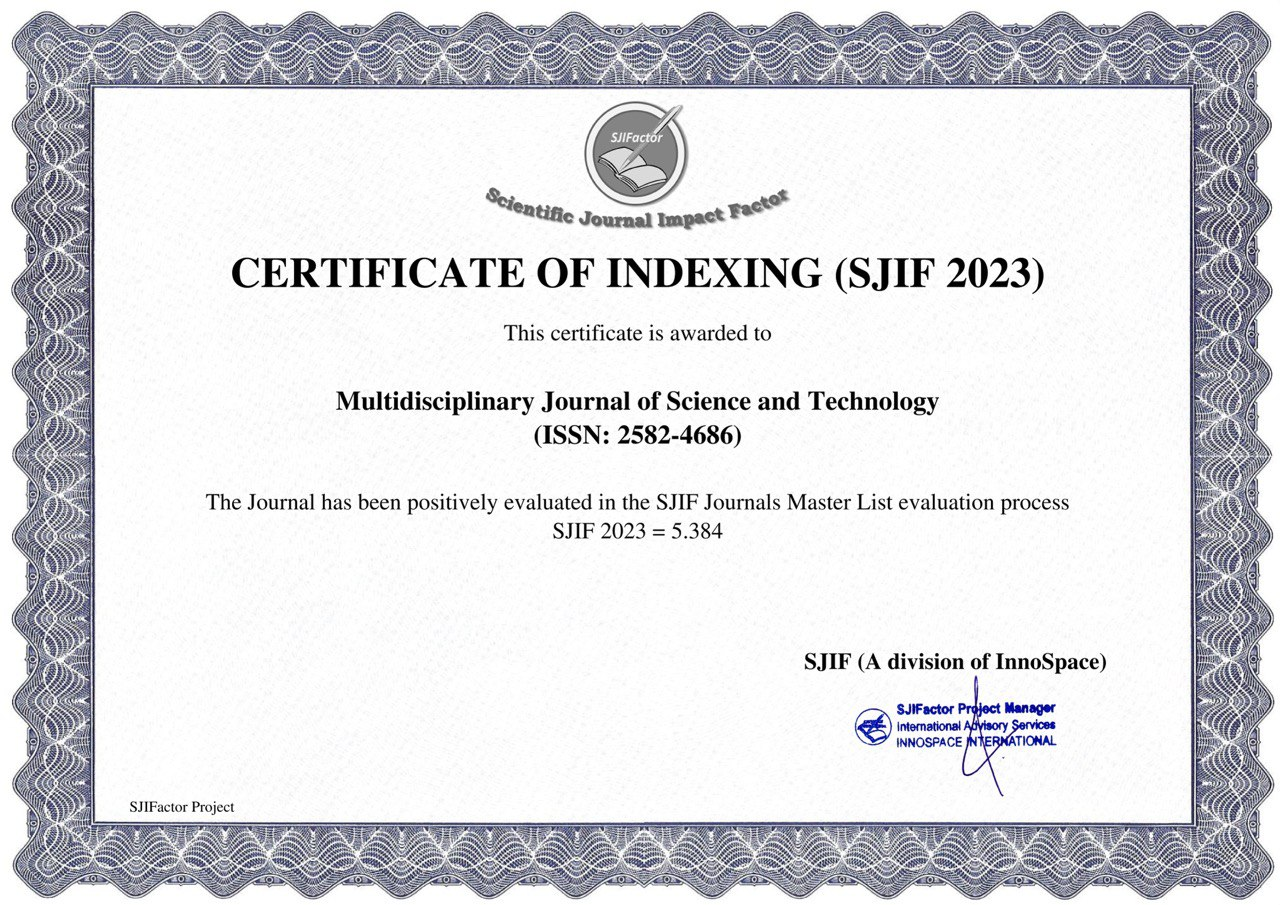
CERTIFICATE
PDF
ZENODO
CERTIFICATE
Published
2024-12-26
Section
Articles
How to Cite
How to Cite
"A COMPREHENSIVE LOOK AT THE EUROPEAN EARTH OBSERVATION INDUSTRY: TRENDS, CHALLENGES, AND OPPORTUNITIES FROM THE 2023 SURVEY"
Omar Ashurbaev
Azimbek Ravshanov
Keywords: Earth Observation, European EO Industry, EARSC Survey 2023, Satellite Data, Industry Growth
Abstract
The data used in this article comes from the latest available 2023 European Association of Remote Sensing Companies (EARSC) survey and the purpose of this article is to present an overview of the state of the European EO industry. This paper outlines the key development in the area, which saw the sector record a 7.5% compounded annual growth rate over the last five years, with expected revenues of €1.79 billion in 2022. This growth shows the importance of the EO industry in meeting major world challenges, which include climate change, urbanization, and resource management through the development of new satellite data products. The survey also underlines the crucial role of the sector in view of the new EU and global context defined by the European Green Deal and the pledge of reaching climate neutrality by 2050. The article, through the mapping of the companies, employment patterns, and the role of the Copernicus program establishes the industry within the domains of Porter’s Competitive Advantage and the Resource Dependency Theory while providing understanding of the industry’s innovation potential as well as its weaknesses. Based on the analysis of the current development of the industry and the challenges identified, policy recommendations are proposed to promote sustainable development.
References
1. Acemoglu, D. and Autor, D. (2011) ‘Skills, tasks and technologies: Implications for employment and earnings’, Handbook of Labor Economics, 4(1), pp. 1043–1171.
2. Christensen, C.M. (1997) The Innovator’s Dilemma: When New Technologies Cause Great Firms to Fail. Boston: Harvard Business Review Press.
3. EARSC (2023) Industry Survey 2023. Available at: [insert link] (Accessed: 17 December 2024).
4. Isenberg, D. (2011) ‘The entrepreneurship ecosystem strategy as a new paradigm for economic policy: Principles for cultivating entrepreneurship’, Babson Entrepreneurship Ecosystem Project, pp. 1–13.
5. Jensen, M.C. and Meckling, W.H. (1976) ‘Theory of the firm: Managerial behavior, agency costs, and ownership structure’, Journal of Financial Economics, 3(4), pp. 305–360.
6. Kotler, P. (1997) Marketing Management: Analysis, Planning, Implementation, and Control. 9th edn. Englewood Cliffs: Prentice Hall.
7. Nelson, R.R. and Winter, S.G. (1982) An Evolutionary Theory of Economic Change. Cambridge: Harvard University Press.
8. Pfeffer, J. and Salancik, G.R. (1978) The External Control of Organizations: A Resource Dependence Perspective. New York: Harper & Row.
9. Porter, M.E. (1990) The Competitive Advantage of Nations. New York: Free Press.
10. Samuelson, P.A. (1954) ‘The pure theory of public expenditure’, The Review of Economics and Statistics, 36(4), pp. 387–389.
11. Rogers, E.M. (1962) Diffusion of Innovations. New York: Free Press.